Commentary: The aviation sector should bounce back sooner than expected
SINGAPORE: Last month, Education Government minister Lawrence Wong predicted that the pandemic would terminal for another four to five years before a post-COVID normalcy ensues.
I am more optimistic about travel and aviation.
Tourism also has a bright long-term growth outlook. I strongly believe that travel will come up dorsum and will continue to abound substantially beyond pre-COVID levels.
READ: Commentary: This is why Singapore needs to save its airlines and aviation sector
For one, the middle class is growing chop-chop beyond Asia and travel is ane of the luxuries people will pursue.
Moreover, people all over have been bitten by the travel bug and are itching to travel to experience and explore the earth once once more after being earth-spring for almost a yr.
Others have family and friends in unlike parts of the earth they would like to run across while some take unfinished business such equally returning to university, resuming business meetings or revisiting work projects.
LEISURE TRAVEL TAKING-OFF AGAIN
Whatever the reason, travel is itching to take-off once again and will be buoyed past pent-upward demand.
An Oliver Wyman global survey of 4,600 people on travel recovery at the end of terminal year showed that 63 per cent of respondents are open to go along leisure travel shortly with most - 35 per cent - saying that they volition be open to doing then once vaccinated.
I believe that factors such as vaccinations, herd immunity and testing improvements will reduce the need for quarantine and allow for more leisure travel in the coming 6 to 12 months.
Once travel is considered prophylactic and quarantine restrictions are eased, this part of the business will resurge.
I exercise think that over again people effectually the world get vaccinated and we know more about the effects of the COVID-nineteen vaccines and how much protection they are according club, global regulations on travel will emerge accordingly.
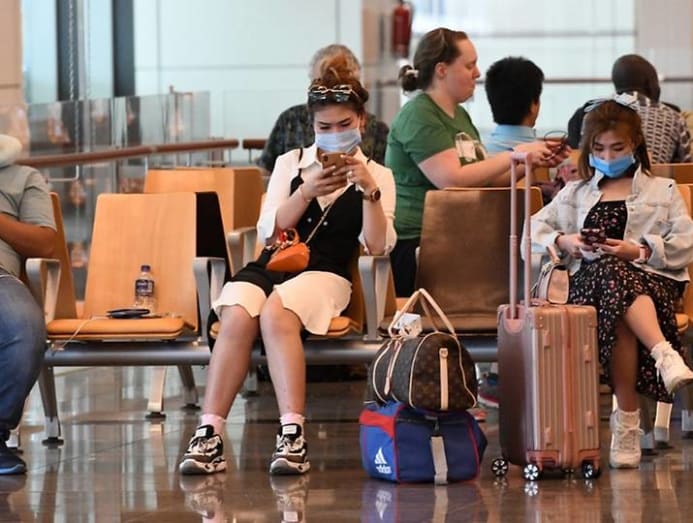
Hopefully, vaccinated travellers are not carriers of the virus anymore every bit initial information from Israel suggests. If this is the case, a quick recovery of leisure travel to levels similar prior the pandemic can be expected.
There are already some signs of leisure travel recovering even if these are happening in small-scale pockets.
Credit rating bureau Fitch said in a published notation this calendar month that new brake measures across Europe have delayed the recovery of leisure travel, and its "timing will be heavily influenced by the success of pandemic containment measures, including vaccination roll-outs".
It predicts such a recovery "nearly likely by May, although it will not reach pre-crunch levels in the brusk term".
"The budget and economic system segments are able to rebound faster from downturns than the higher-tier segments, and nosotros expect this to happen after this crisis."
The International Air Transportation Association too recently predicted "a 13 per cent increment in travel demand this year" - mostly leisure - fifty-fifty if that is a modest projection.
THE BUSINESS OF TRAVEL
All the same, leisure travellers are much more price-sensitive than business travellers. And then, to entice leisure travellers at the onset, airlines will have to be careful at raising prices of tickets. Past balancing demand, they will help increase flight loads, which will slowly reduce the losses they are incurring.
That is until business organization travel resumes some form of normalcy. Airlines typically demand business organization travel to make flights profitable.
Unfortunately, the one blip amongst all this optimism is that concern travel may take four to v years to reach pre-COVID levels.
READ: Commentary: SIA's resumption of daily non-finish flights to key US cities - how necessary are they?
The transformation of moving many meetings online ways that we demand less sales, business organisation development and consulting trips to be fabricated.
It means that, without catching red-eye flights halfway effectually the world, the productivity of such executives increment as their scope and ways of working modify also.
It appears that executives may find it necessary to but travel to further locations as it may be more price-effective to replace regional travel with online communication, which means that more than of their trips are probable to exist long-haul compared to pre-COVID.
This should bode well for long-haul business travel. However, short to mid-haul trips will be severely afflicted with the new means of working.
READ: Commentary: Asian airlines may never recover without consolidation
Government SUPPORT IS IMPORTANT IN THE Interim
To help the industry to at least somewhat mitigate the loss of high-yield passengers, the contempo S$870 1000000 pledged in support of the aviation sector announced by Deputy Prime Minister and Minister for Finance Heng Swee Keat in this year's upkeep would be welcomed by the airlines and other industry players.
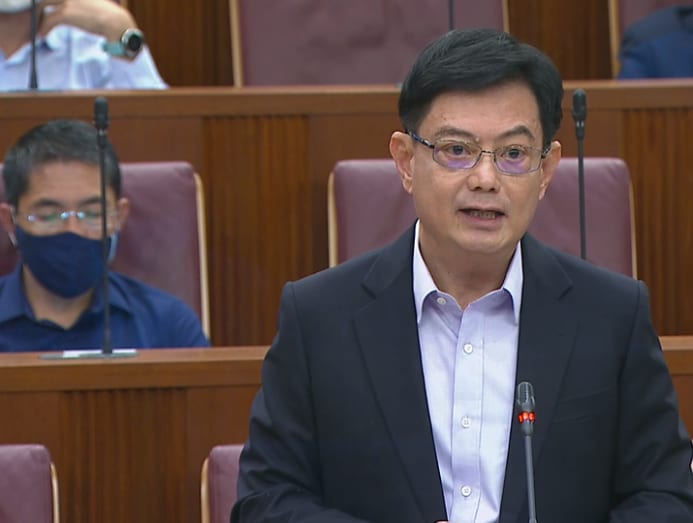
These support measures include a 10 per cent landing charge rebate and a 50 per cent rental rebate for ground handling companies' lounges and offices at the Changi and Seletar Airport terminals.
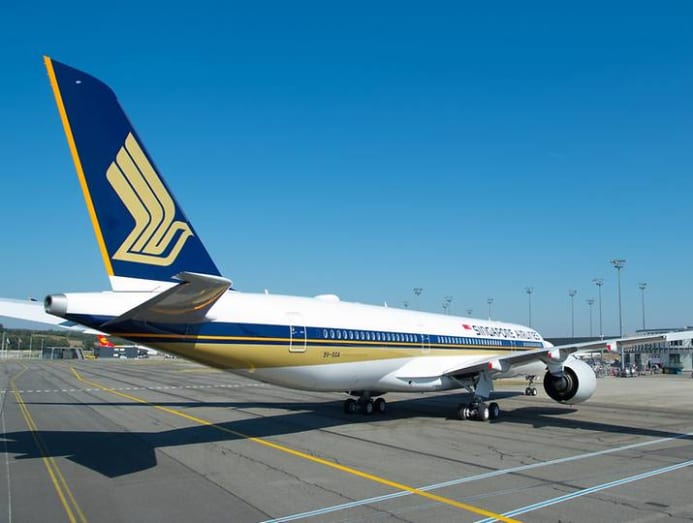
These cost savings are likely to translate into more capacity being deployed earlier as has already been seen with Singapore Airlines (SIA) resuming their daily non-stop flights to key United states destinations despite operating at less than a quarter of the flight load.
Given that some airlines went under and those that survived accept cut chapters and costs, they should be able to generate positive greenbacks flows again within the coming 12 months even if business travellers trail leisure passengers.
However, while waiting for cash menstruum to ramp up, supplementary funding from the government is nonetheless needed to provide financial buffer and build resilience against time to come shocks.
By providing firms fiscal back up while the airlines' capacity utilisation is low allows them to up their game during this quieter period.
READ: Commentary: Tin Singapore be a major COVID-19 vaccine transshipment hub and salvage its aviation manufacture?
Whether information technology is new hygiene solutions, contactless or least- contact passenger journeys, or the firms' more aggressive push into digitisation, airlines volition and tin can do these only if they are vigilant of the latest trends and confident they will survive this pandemic.
Giving firms this confidence and nudging them towards innovation will enable them to exist well-poised in a recovery.
For an aviation hub such as Singapore, pulling alee is of import because of network effects.
For this ecosystem, volume builds volume. The college the connectivity, the more book volition be attracted, making this a positive, cocky-reinforcing virtuous cycle.
These networks outcome work for travellers and for cargo and explain why SIA resumed chapters quickly on key strategic destinations.
The importance of beingness a hub tin be felt by the whole economy and not but the industry, hence justifying Authorities assist. Aviation contributed some 12 per cent to Singapore's Gdp prior to the pandemic.
Tourists that come in to the land via air travel tend to stay for a few days leading to a positive touch on on the revenues of hotels, F&B outlets, retail stores, taxies and more than.
Concern travellers likewise, who are more than inclined to concur meetings, conventions and conferences in the city contribute to spending.
For Singapore, a cutting-edge, powerful aviation ecosystem directly benefits the nation every bit a whole. Ease of travel, price competitiveness, and quality of the travel experience are all critically important for the many other sectors required to build the nation'southward competitive border.
READ: Commentary: No travel plans these school holidays, simply that's ok
From wealth management, to tech outset-upwardly ecosystems and the large MNCs – a strong aviation sector that pulls abroad from its regional competitors helps to attract these businesses and contributes to Singapore'due south futurity readiness and prosperity.
Price-CUTTING SHOULD Continue
However, despite receiving connected Authorities assistance, to maintain this recovery momentum, airlines like SIA will accept to take tough human capital decisions.
Players in the aviation sector may find that they will need to shed jobs to cut costs and so that they can proceed to exist lean to respond to need.
Hither, they may be more willing to cutting workers in task functions that can either be trained relatively quickly or are hands available in Singapore'due south talent pool.
Airlines may find a lesser need to keep such staff on the payroll when they are underemployed.
Companies may find that, if headcount in these areas is likewise high, information technology can exist reduced now and rebuilt in footstep with increasing traffic.
For specialist positions such equally pilots and expert technicians, airlines may be more hesitant to permit them get as such employees, one time let go, may get culling employment, leave Singapore or observe that their skills are less up-to-date when they are set up to be re-employed.
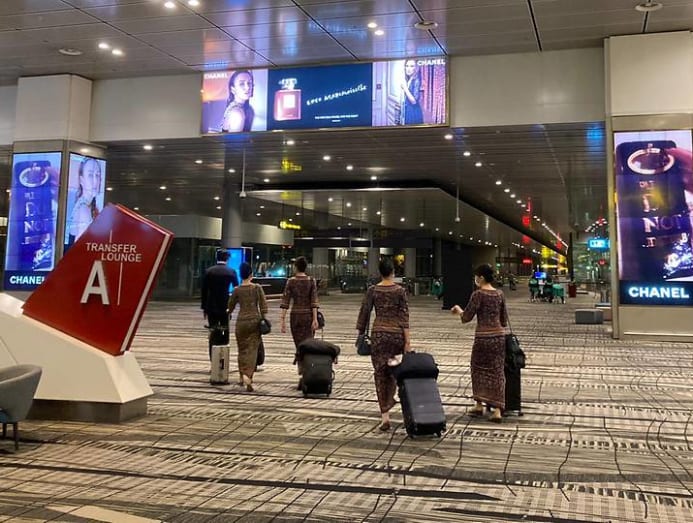
Whatever of those scenarios may make it challenging for the airline to rehire them and rebuild that capability.
Therefore, it would exist good to retain employees with those skills and apply them part-time perhaps to keep them relevant and on the payroll.
Hither particularly, the extension of the Jobs Support Scheme by a further half dozen months is of great value. The Government may revisit the resource allotment depending on how fast travel bounces back.
SIGN UP: For CNA'south Commentary weekly newsletter to explore issues beyond the headlines
But for now, it appears that this may be the last tranche of support needed if leisure travel slowly recovers with increasing vaccination and global business travel creeping upward too.
On their part, airlines need to expect at cutting costs to remain lean and to position themselves to be ready for the upturn.
Mind: A labour MP, a business community leader and an economist intermission down the shifts underway in Singapore'southward Budget 2022 on CNA's Heart of the Matter podcast:
Professor Jochen Wirtz is vice dean for MBA programmes and a professor of marketing at National Academy of Singapore Business School. He is the co-author of the book "Intelligent Automation – Welcome to the World of Hyperautomation".
Source: https://cnalifestyle.channelnewsasia.com/commentary/commentary-aviation-sector-should-bounce-back-sooner-expected-283016
0 Response to "Commentary: The aviation sector should bounce back sooner than expected"
Postar um comentário